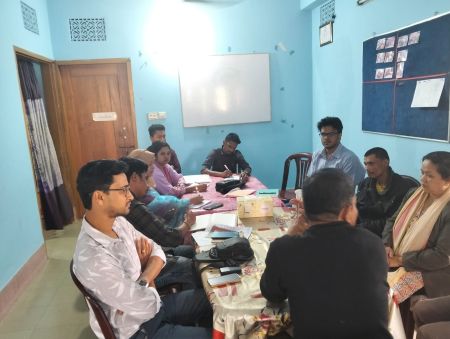
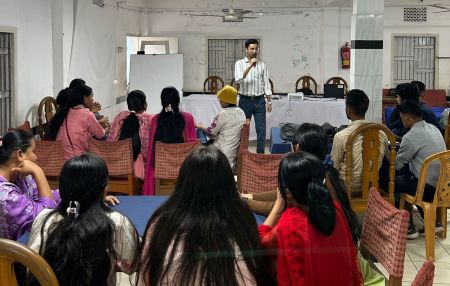
The program officially started on the evening of February 19 with an ice-breaking session between teachers from the Education Program and members of the Young Scholar team. Scholars from Dhaka and Sylhet, along with students from the CHT region, engaged in discussion which helped everyone feel comfortable and connected, creating a friendly and open environment for the days ahead.
Exposure visit in Sreemangal-YSP program
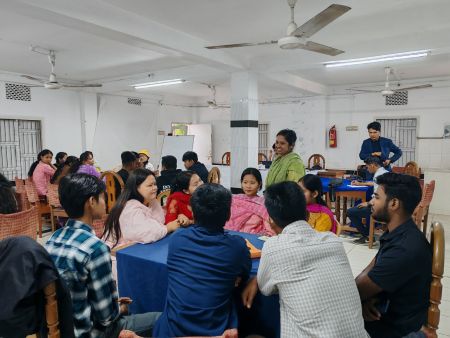
On February 20, teachers from three remote hill districts shared their real-life experiences of providing education in geographically isolated and resource-limited areas. They openly discussed challenges such as poor infrastructure, long travel distances, and socio-cultural barriers. Listening to these experiences gave the Young Scholars a deeper understanding of the realities in the hill regions.
The Young Scholars also shared their own challenges, aspirations, and initiatives, and explored ways to collaborate and support each other. In addition, the team shared their learning experience from the Indonesia visit organized by Sasakawa Leprosy Initiative, which added an international learning perspective to the discussion.
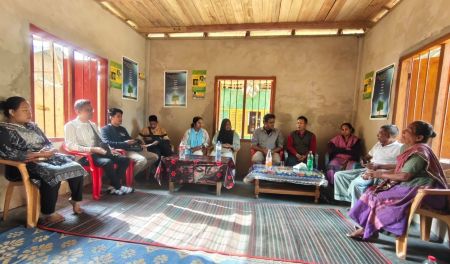
On February 21, the team traveled by boat to the remote Juraichhari upazila to visit the home community of Young Scholar Sushanta Chakma. There, they met with a local LPO and interacted with the LPO leader, Laxindra Chakma, who has personally experienced disability due to leprosy. He shared his life journey and advocacy work for people affected by leprosy in his community. His story highlighted both the stigma surrounding the disease and the resilience needed to overcome it.
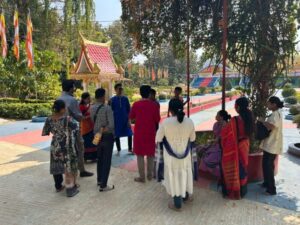
The delegation also visited a local Buddhist monastery, where they learned about the spiritual and cultural traditions of the hill communities and gained insights into teachings rooted in Buddhism. On their way back, the team made a brief stop in Barkal upazila for refreshments.
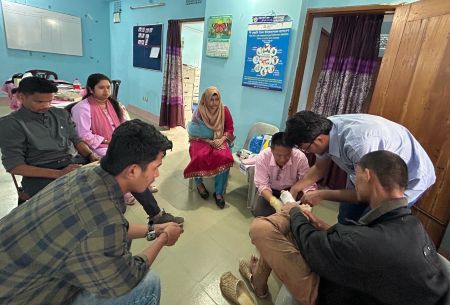
On February 22, the team visited the local leprosy office to observe ongoing health services and community-based interventions. Participants were introduced to clinical procedures, including the dressing of a complex ulcer case, and listened to a patient’s personal story of struggle and recovery.
Later, Klinton Malakar conducted a training session for the scholars and mentors, with special focus on mentors, on bill and voucher management. Through this session, participants gained a clear understanding of proper financial documentation, accounting procedures, and compliance requirements, which strengthened their capacity for transparent and accountable financial management.
The visit concluded with a reflection and question-and-answer session where participants shared their key learnings and discussed how these experiences would influence their future leadership journey.
Overall, the exposure visit clearly highlighted the differences between Bangladesh’s mainland and the hill regions in terms of geography, culture, access to services, and daily life realities. Through direct engagement, local food, cultural exchange, and community interaction, the Young Scholars developed a deeper understanding of inclusivity, diversity, and grassroots development challenges.